
Counting, Speaking and Other Magic Mental Abilities.

Our practises of measuring and quantifying things have given rise to many linguistic tools and methods which we can spend years studying and mastering in their own right — for example, by studying fields like Statistics.
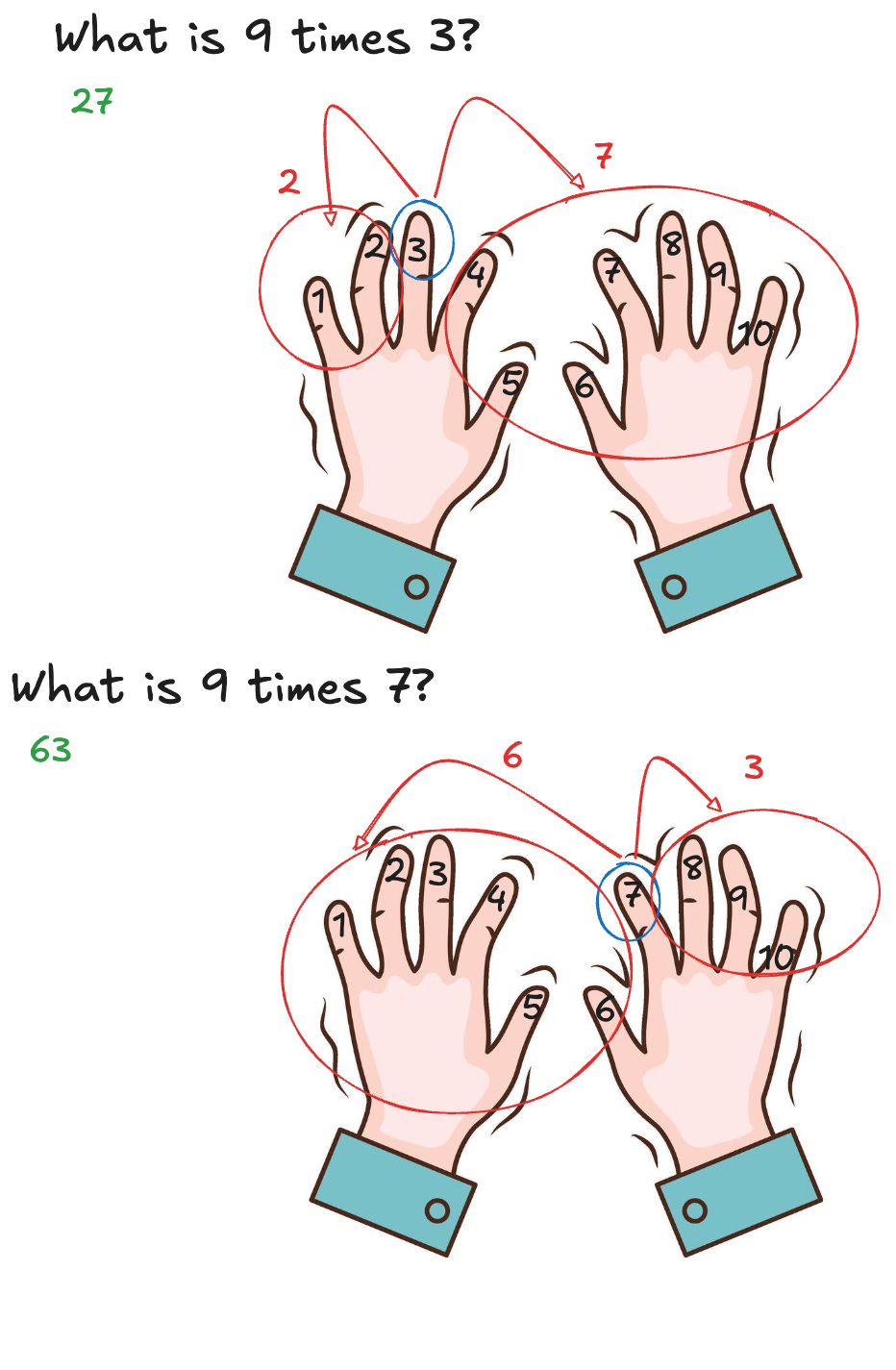
To give an example of an embodied mathematical skill that might be <in your body>, consider a technique you might have learnt in primary school to more easily memorise, or “cheat”, on your nine times tables. This technique involves using your hands ( assuming you have all of your fingers ) and running an index ( starting at 1, I imagine this method is from before Computer Science got big ) for the ordinality of the element in the sequence “multiples of 9” that we are interested in reproducing. You can then look at your hands and enumerate the number of fingers to the left and then to the right of your hand, with the left side giving you the tens position digit, and the right side giving you the ones position digit, which you concatenate as a string, with the concatenated value being the product of nine times our index.
I think the last part is one of the more interesting parts of the method because it involves placing the method of counting to produce a name of a “quantity” character ({0,1,2,3,4,5,6,7,8,9}) in conjunction with the method of using language and treating that character as a sound of mark that can be reproduced by us which ought to be contrary to Platonic/Representationalist feelings that quantities are <VALUES> that stand behind the language we use for mathematics as their “real”1 meanings.
I think there’s something insightful, almost similar to a meditative practise leading to a breakthrough here if we reflect upon this.
In fact, at this point in reading here, I recommend trying to answer the following questions, and as you do so, pay attention to what you actually do and experience.
9 x 8
9 x 2
9 x 3
Upon reflection of these practices that are embodied within us, just like all our language-producing skills, we found an initial pull towards producing some very theoretical claims about how language works, committing us to views about meanings as things, and those meanings exist somehow and are related to some mental thing that stands behind our production of language.
Our enthymematic theoretical assumptions about language don’t make much sense when we try to clarify what we might possibly even mean, and fare even worse when we try to find them. Problematically for our philosophical views, those very same commitments we now come to see as contentless are doing almost all of the work in our substantive theorising about Philosophy, underwriting our assurances about how things like language and mind work.
In the case of this example the Semantic/Representationalist assumption seems to be that meanings “stand behind” words as their <referent> or something — it’s hard to say because these views are so hand wavy and depend on familiarising their theorists with terms like “essence”, “nature”, “Form”, “meaning” and so on whilst only using these terms interchangeably with the unclear theory they purport to explain, offering no insight. Even less clear is what “referring” is supposed to mean. I know what it means for ME to refer. I can point with my hand. I can even say a word at the same time. That is not what’s under contention here. We aren’t talking about “referring” as a linguistic act of using a word classified as a grammatical noun in a particular kind of context, but the purported metaphysics that “grounds” (or something) all of that by an occult entity that is the word meaning being “in” or “had by” my mind, causing or being somehow connected to my use of an expression and ALSO “about” “the world” by way of a power called intentionality. What’s that? Well, we said referring terms are about what they refer to, didn’t we, so why not say “about-ness”? Why not? Because how on earth does that help? What the hell is about-ness? Is it made of the same stuff they make McNuggets out of? Through reification and nominalisation, we’ve immediately committed ourselves to a queer slum of occult, bizarre metaphysics.
When we pay careful attention to what we actually do producing language, or doing our nine times table with our hands, we might recognise that whilst we were initially compelled by some feeling to produce a confident sentence about an invisible numeric value that sits “behind” our number-language, that when we try to find the thing we said was there in our mind through paying more careful attention with our mind, we find nothing. We grasp at thin air and just find more ordinary sensations, experiences and emotions— the wall in front of our faces, our tongue in our mouth —we find nothing like a <MEANING> or <VALUE>, when we pay attention we hear and feel ourselves making noises with our vocal chords as we compress air through our throat and move our mouth, and we pass our eyes over our meaty hands with their keratin claws and hair as we move each consecutive index finger down one by one “saying” to ourselves the sequence of numbers and learning to co-ordinate that pattern with each finger movement, stopping on the one for the index of the multiple we want to find.
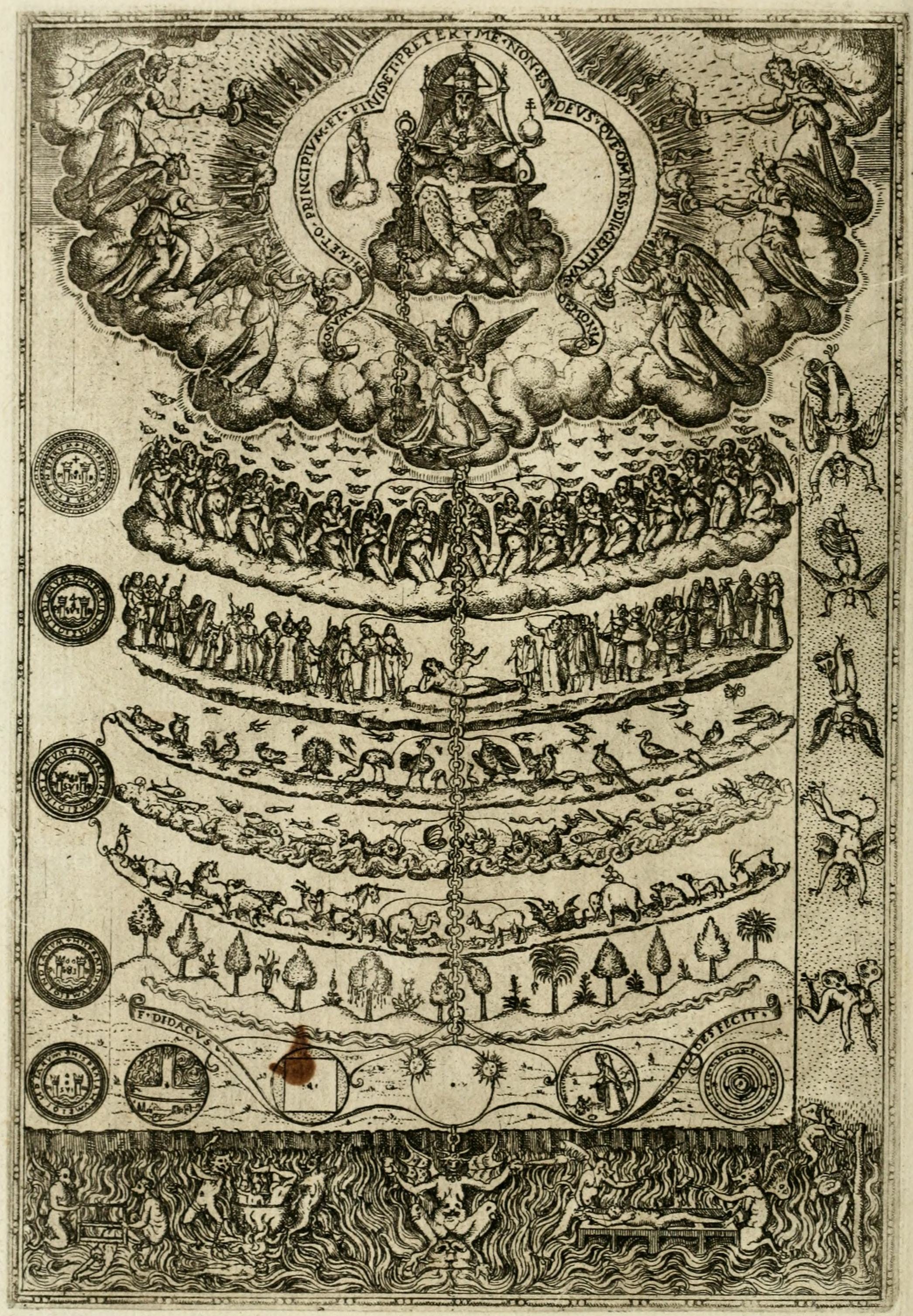
What I don’t find is Rational Man way up the degrees of Being using his Psychological faculties to grasp haecceities. I find a hairy, meaty ape moving itself, wanting food, making sounds. And I don’t mean to say that to indicate something is missing because the obvious “meaning”(s) are missing from the picture, so now we should be motivated to construct more and more sophisticated metaphysical solutions. I don’t think it’s a problem at all because I don’t think there ever was a “meaning” there to begin with. Somehow, we came under a kind of illusion of depth in our psychology.
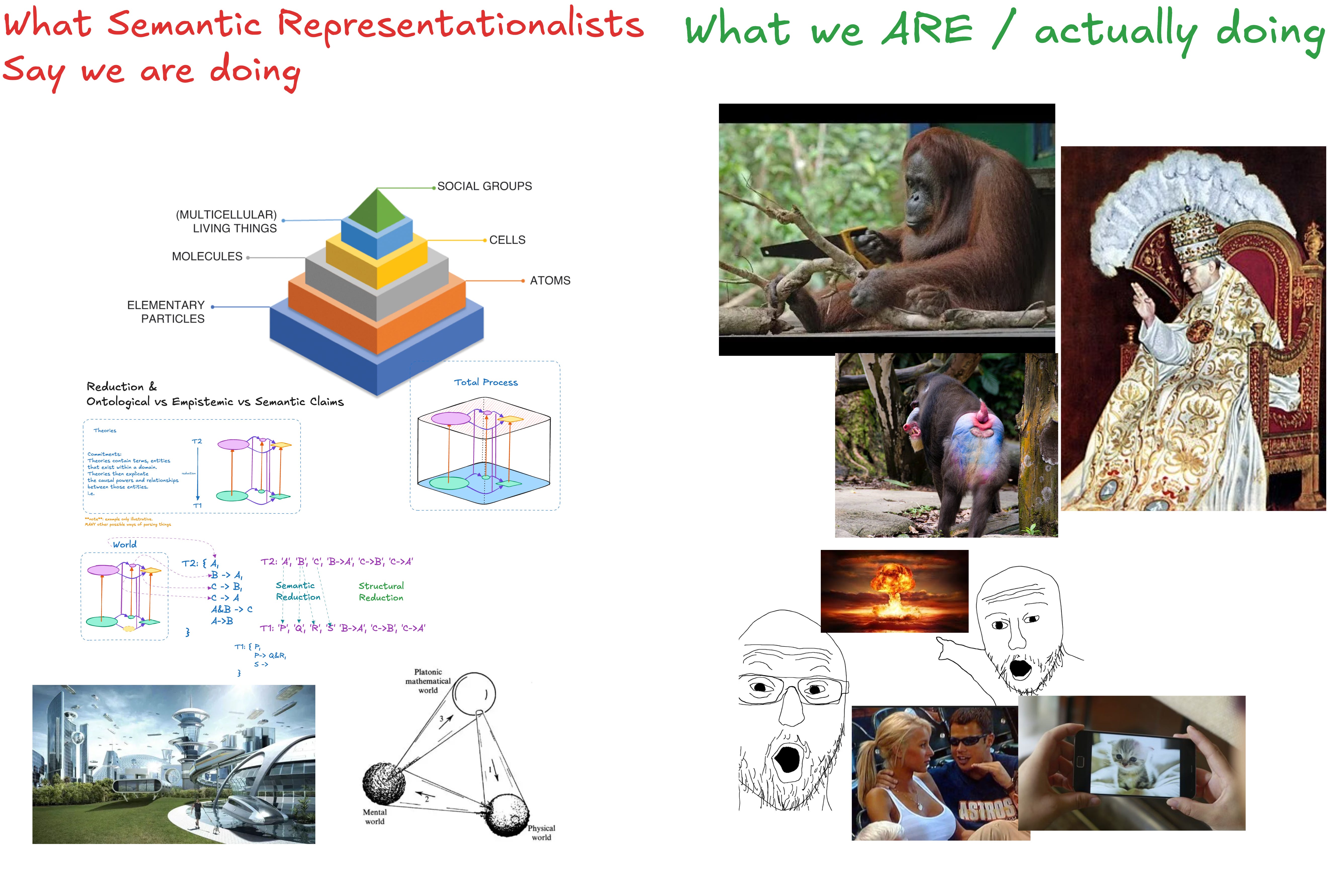
It seems to me that we were (assuming you’re following me) under the spell of some affective illusion produced by our familiarity with producing certain kinds of sentences about “meanings” uncritically, but never operationalising our “meaning” talk against any kind of entity or practise like the one described in the THICCCC theories. On interrogation, the illusion of depth is ironed out, our linguistic skills are “flat” ( see Nick Chater’s work), and we don’t consult Platonic Heavens to count, but instead our greasy, meaty primate paws. We have thought far too highly of ourselves, and in doing so, we have tried to set ourselves apart from nature through our familiarity and utility with the noises we produce rather than those made by Wood Pigeons. We flatter ourselves that we’re different from the chimps we pretend to be shocked by when we see them go to war with another because of our ability to engage in deforestation.
There isn’t any particular further theme to tease out here, but a series of related ideas that I should turn into more specific reflections on language.
If you prefer pictures and humour, I found some strange sketches in my notes about these ideas. So I thought I would leave them here at the end to finish up the reflection.
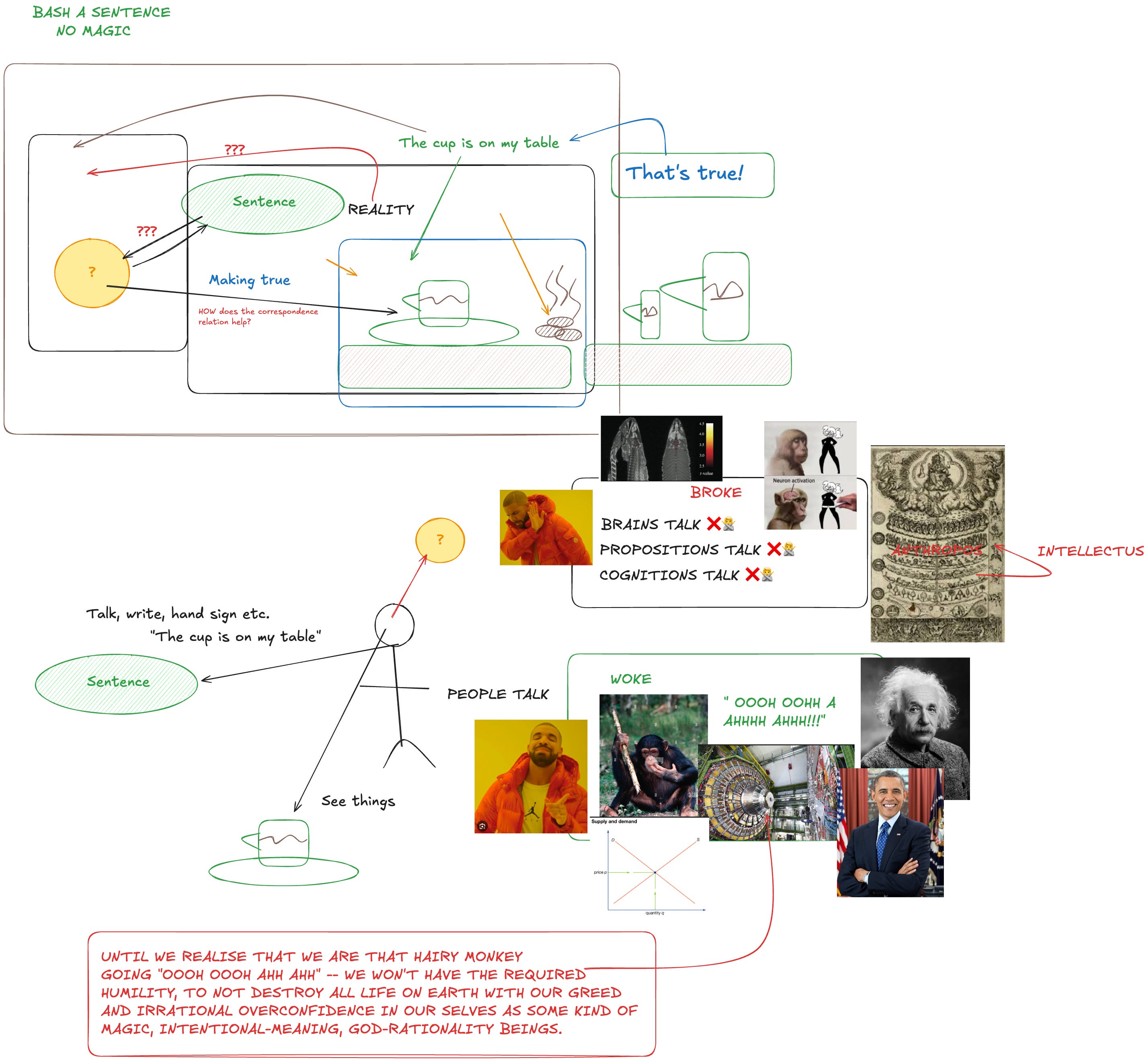
See my previous post on the rhetorical and empty use of words like “real” and “actual” when contrasted against opposed “just” and “mere” views.

You are definitely rapping at the window at something very true, the representational view distorts the view we have of ourselves and how we function as animals. I would push back on one implication though: in deflating the representationalist picture, there's a suggestion that the question itself was empty to begin with. I don't think that follows. The failure of that picture might mean we need a different kind of attentiveness to what's already there, rather than concluding there was nothing there to find. Wittgenstein never ceased asking questions even well after PI, and although he never gave much in terms of alternatives, I don't read him as condemning the idea that we can explore our condition through expressive practice — art, poetry, and so on. Happy to hear whether I'm misreading you though.
Unfortunately I never used the finger thing. I agree with most of this though!